Does Kling AI allow NSFW: The Definitive Guide to Content Policy, Filters, and Bans
Does Kling AI Allow NSFW: The Definitive Guide to Content Policy, Filters, and Bans
Since its global introduction, the Kling AI text-to-video model, developed by the Chinese tech giant Kuaishou, has been celebrated for its ability to produce highly cinematic, high-definition, and complex videos from simple text prompts. It quickly established itself as a formidable rival to Western models like OpenAI’s Sora and Luma’s Dream Machine.
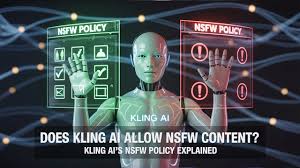
The incredible technical capabilities of Kling AI, however, are fundamentally tied to a strict, non-negotiable content policy. For millions of users across the globe—from independent artists to commercial studios—a single, critical question remains: Does Kling AI allow NSFW (Not Safe for Work) content?
The unequivocal answer, confirmed across official documentation and community experience, is No.
Kling AI maintains a policy of Total Prohibition against sexually explicit, pornographic, and overtly suggestive material. This strict approach is enforced by one of the most rigorous and often controversial filtering systems in the generative AI space. This article provides the definitive guide to understanding this policy, dissecting the technology that implements the ban, exploring the real-world impact of over-censorship on the user community, and examining the search for uncensored alternatives.
We will explore the corporate, legal, and ethical imperatives driving this decision and why the constant tightening of the filter has become the most divisive issue shaping the future of Kling AI.
Section 1: Kling AI’s Official Stance: Zero Tolerance is the Rule
Kling AI’s content moderation philosophy is rooted in legal compliance, market strategy, and ethical responsibility, prioritizing a safe, mass-market platform suitable for global commercial use.
The Policy of Total Prohibition
Kling AI’s Terms of Service and Community Guidelines are clear: explicit sexual content and pornography are strictly forbidden. This rule extends beyond basic nudity to encompass several types of content considered Kling AI NSFW:
-
Sexually Explicit Content: Content created for the purpose of pornography or sexual gratification is banned. This includes visually explicit videos, as well as prompts attempting to generate suggestive or intimate scenarios.
-
Harmful or Illegal Content: The filters actively block content that facilitates illegal activities, violence, self-harm, hate speech, or the creation of non-consensual intimate imagery (deepfakes).
-
Politically and Culturally Sensitive Material: The platform’s origin dictates that its filters are particularly sensitive to content involving real-world political figures, satirical critiques of government, and topics deemed culturally sensitive or disruptive in various jurisdictions.
Crucially, as confirmed by official guides, the platform offers No Adult Toggles or Unfiltered Modes. By design, Kling AI is a closed system built for safe consumption and commercial production, meaning there is no way, paid or otherwise, to officially override the core content restrictions.
The Corporate Imperative for Censorship
The zero-tolerance policy on Kling AI NSFW content is not merely arbitrary; it is a critical business strategy:
-
Legal & Regulatory Adherence: As an offering from a major Chinese technology firm, Kling AI must adhere to stringent content laws that prohibit pornography and political satire, which is a major factor driving its strict global censorship model.
-
Mass Market Appeal and Investment: To attract major advertisers, corporate partners, and mainstream venture capital, a platform must maintain a ‘clean’ public image. Unrestricted explicit content is a financial and commercial liability that would instantly derail the platform’s ambitions for mass adoption.
-
Preventing Misuse: Given the stunning realism of Kling AI’s video generation, strict filtering is essential to mitigate the risk of creating harmful deepfakes—a primary ethical and legal concern for all advanced video AI platforms.
Section 2: The Iron Filter: Dissecting Kling AI’s Multi-Layered Moderation
The enforcement of the Kling AI NSFW ban is highly effective due to its sophisticated, multi-stage filtration system, which users report has become drastically stricter over time.
How the Filter Intercepts Content
Kling AI employs a powerful defense that operates on three fronts to prevent the generation of explicit material:
-
Prompt Analysis (Text Filter): This is the first line of defense. Advanced Natural Language Processing (NLP) models scan the user’s text prompt for prohibited keywords, euphemisms, or suggestive language. If the filter detects a high probability of an explicit outcome, the generation is blocked instantly, often resulting in a “Prompt contains sensitive words” error message.
-
Input Image Screening (Visual Filter): For image-to-video generations, the source image is analyzed for nudity, suggestive poses, or explicit themes. User reports highlight that this filter is notoriously over-sensitive. Even a man walking through a doorway wearing only a speedo has been rejected, demonstrating the filter’s aggressive approach to any form of minimal clothing or highly muscular body imagery.
-
Output Real-Time Scanning: The most technically challenging aspect is real-time monitoring of the generated video frames. If the AI model starts to produce visual content that violates policy—such as unintended nudity or graphic violence—the process is terminated, leading to a “Kling AI generation failed” message. This ensures that even if a clever prompt slips through, the final output remains compliant.
The Elimination of Loopholes and the Censorship Cycle
In earlier versions of the model (e.g., Kling 1.6), some users reported finding “gaps” or “loopholes” that allowed “borderline” suggestive content to be generated by using creative prompting or specific source images.
However, the consensus among the community is that the platform has aggressively patched these vulnerabilities. As a result, content that was previously considered acceptable (e.g., stylized violence, satire, or mildly suggestive poses) is now being blocked. This continuous, unannounced tightening of the screws has been the catalyst for mass user frustration.
Section 3: The Creative Backlash: Over-Censorship and the User Exodus
While Kling AI has largely succeeded in preventing direct Kling AI NSFW generation, the side effect is “collateral damage” that stifles creative expression and alienates a large, paying user base.
Blocking SFW and Artistic Intent
The biggest complaint is that the filter is too broad, leading to the rejection of perfectly SFW creative and artistic content:
-
Narrative and Genre Limitations: Creators of fantasy, horror, intense action, and even satirical comedy report constant failure. Prompts involving dramatic conflict, battle scenes, or even simple physical interactions are frequently blocked. As one frustrated user noted, the platform limits output to what is essentially “tamer stuff.”
-
Unintentional Filtering: The filter is often so sensitive that it blocks common, innocent language. Prompts like “man walks through doorway” are filtered if the man is in swimwear, or complex prompts are rejected due to a single, contextually safe keyword being flagged as “sensitive.”
-
The “Shambles” Consensus: On community forums, users who once hailed Kling AI as the “undisputed best online video platform” are now labeling the experience a “shambles.” They feel their annual subscriptions are being devalued because they are “limited to much tamer stuff,” which they claim is not what they signed up for when the quality was first released.
The Ethics of the Filter
The controversy extends to ethical debates over who should control the content: the platform or the user. Many users argue that creative freedom should not be restricted by the creation tool itself.
“Creative freedom should not be restricted and censored. Only platforms where content may be posted should decide on censorship. Like how you can’t post nudes on Instagram. The program to create the content should not be the one censoring.”
This perspective highlights the growing tension between developers protecting their assets and users demanding the right to explore their ideas without algorithmic moralizing, regardless of whether the intent involves Kling AI NSFW content or not.
Section 4: The Bypass Dilemma: High Risk and Low Reward
For those still determined to generate Kling AI NSFW content, the battle to bypass the sophisticated filter has become a high-risk, low-reward endeavor, often leading to account penalties.
Why Bypassing Video AI is Difficult
Unlike text-based models where a well-crafted prompt can “jailbreak” the AI, video AI requires more complex manipulation due to the dual filtering system:
-
Indirect Language: While users can try techniques like using neutral or symbolic language (e.g., “intense conflict scene with dramatic visuals” instead of explicit fighting terms), the final visual output is difficult to control.
-
Prompt Variation: Repeatedly trying slightly modified prompts is a common strategy, as subtle rephrasing can sometimes sneak past the automated checks. However, this is time-consuming and often results in “generation failed” errors, wasting user credits.
-
The “Old Method” is Gone: Older techniques involving leveraging loopholes in source image uploads or prompt concatenation are now largely ineffective due to the continuous and aggressive software updates deployed by Kling AI to secure its platform.
Consequences of Violation
Kling AI’s Terms of Service clearly state that the platform has the right to monitor, review, and regulate user-generated content. Attempts to circumvent the safety filters are explicitly prohibited and can lead to severe penalties:
-
Account Suspension or Ban: Frequent or severe attempts to generate Kling AI NSFW content can result in the suspension or permanent banning of the user account.
-
Loss of Credits: Subscriptions and purchased credits are non-refundable, meaning users risk losing significant financial investment by violating the rules.
The risk of losing access to the high-quality generation capabilities outweighs the sporadic success of generating borderline content, making alternatives an increasingly attractive option.
Section 5: The Alternatives: Where Uncensored Video Generation Thrives
The stringent policy of Kling AI NSFW content has created a massive market opportunity for competitors willing to accommodate the demand for creative freedom.
The Migration to Permissive Platforms
Users are actively discussing and migrating to platforms that offer high quality with fewer content restrictions. This confirms a fundamental economic law: demand for uncensored media will always drive the technology to meet it.
-
SeaArt AI: Cited as a key alternative, SeaArt AI is highlighted for its more permissive content guidelines, allowing artists and creators to explore diverse themes without the “excessive filtering” of Kling AI. It appeals to users seeking both creative freedom and high-quality results.
-
Wan AI (WanX): This model is praised for balancing realism and quality while preserving prompt intent without censorship. It is seen as a development that directly challenges Kling AI’s policy by prioritizing the user’s vision.
-
Open-Source and Decentralized Models: The growing availability of powerful, locally-run, and open-source models (such as certain versions of Hunyuan) is the ultimate threat. These models are typically uncensored by default, offering users complete control over their creations without the corporate oversight and legal risk that necessitate Kling AI’s strict filters.
The Future of the Market
Kling AI’s defining conflict is the trade-off between technical superiority and restrictive compliance. While its video generation quality remains elite, its refusal to allow even moderately mature or challenging content is pushing high-value, boundary-testing creators toward competing platforms.
The future of the AI video market may not be dominated by a single, censored giant, but rather by a divided landscape: one reserved for safe, commercial, and mass-market content (Kling AI) and another for bold, uncensored, and creatively unrestricted content (its competitors).
you can also read does character ai allow nsfw here