
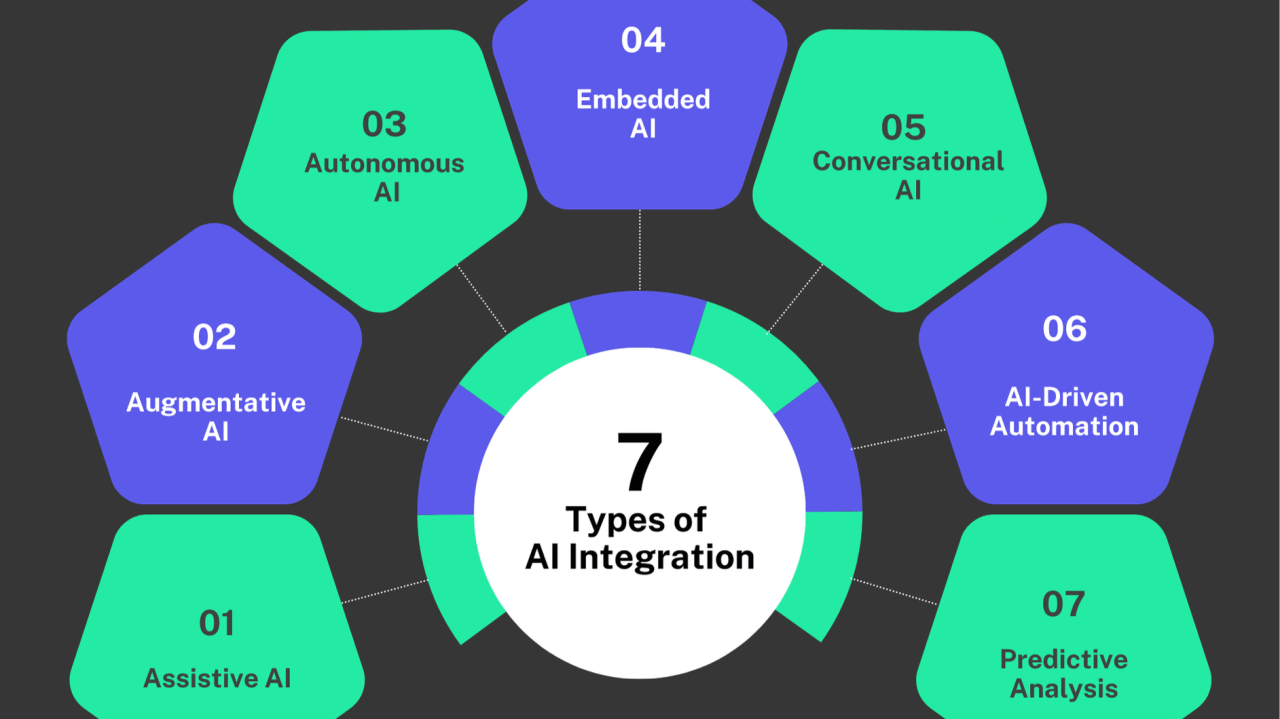
The Seven 7 Artificial Intelligence Patterns: A Comprehensive Framework for AI Development and Strategy
The Seven 7 Artificial Intelligence Patterns: A Comprehensive Framework for AI Development and Strategy
The concept of artificial intelligence patterns serves as a vital strategic framework, moving the discussion of AI beyond niche algorithms and into the realm of actionable business strategy. While the underlying technology is often complex—involving neural networks, deep learning, and vast datasets—the application of Artificial Intelligence often falls into a small, repeatable set of fundamental strategies. Understanding these core artificial intelligence patterns is essential for anyone aiming to successfully design, manage, or invest in AI projects.
These patterns, widely popularized by thought leaders in the industry, distill the thousands of possible AI use cases—from chatbots to autonomous vehicles—into seven distinct, high-level applications. By identifying which pattern, or combination of patterns, a project utilizes, organizations gain clarity, align stakeholders, manage risk, and accelerate time-to-market. This comprehensive guide will detail each of the seven artificial intelligence patterns, provide tangible examples, and explain why a pattern-based approach is the future of intelligent systems development.
I. Defining the Pattern-Based Approach in AI
In software engineering, a “design pattern” is a reusable solution to a commonly occurring problem. The concept of artificial intelligence patterns extends this idea to the strategic domain. It shifts the focus from how the AI works (ee.g., “We are using a Convolutional Neural Network”) to what the AI is trying to achieve (e.g., “We are trying to recognize an object in an image”).
This strategic framework achieves several key objectives:
-
Simplification: It demystifies AI, making the technology accessible to business leaders and project managers who lack deep technical expertise.
-
Alignment: It ensures alignment between the technical team (who build the algorithms) and the business team (who define the goals) by using a shared, non-technical vocabulary.
-
Feasibility Assessment: It allows organizations to quickly determine the required data, resources, and technical maturity needed for a project based on the pattern it employs.
The following seven categories represent the most common and powerful artificial intelligence patterns observed across modern industry applications.
II. The Seven Foundational Artificial Intelligence Patterns
1. Recognition Systems (The Perception Pattern)
The Recognition Pattern focuses on the AI system’s ability to perceive and interpret the world by identifying and classifying objects, sounds, images, or text. This is the pattern that allows machines to “see” and “hear.”
| Attribute | Description |
| Core Goal | Identification and classification of entities in unstructured data (vision, audio, text). |
| Enabling Tech | Deep Learning, Convolutional Neural Networks (CNNs), Recurrent Neural Networks (RNNs). |
| Key Output | Tags, Labels, Segmentation Masks. |
| Business Examples | Facial Recognition (security/access control), Optical Character Recognition (OCR) (digitizing documents), Medical Image Analysis (identifying tumors in X-rays), Speech-to-Text (transcription). |
This is perhaps the most visible of the artificial intelligence patterns, underlying everything from unlocking your smartphone to advanced industrial quality control where cameras identify defective parts on an assembly line.
2. Conversational/Human Interactions (The Communication Pattern)
This pattern focuses on enabling machines to interact with humans through natural language (text or voice) in a coherent and contextual manner.
| Attribute | Description |
| Core Goal | Facilitate natural communication and interaction between humans and machines. |
| Enabling Tech | Natural Language Processing (NLP), Natural Language Understanding (NLU), Large Language Models (LLMs), Generative AI. |
| Key Output | Dialogue, Summaries, Text Generation, Voice Commands. |
| Business Examples | Customer Service Chatbots (handling inquiries), Virtual Assistants (Siri, Alexa), Code Generation (GitHub Copilot), Meeting Summarization (transcribing and abstracting key points). |
The explosion of Generative AI, spearheaded by models like ChatGPT, has made this one of the most transformative artificial intelligence patterns across nearly every sector, fundamentally changing workplace productivity and customer engagement.
3. Hyper-Personalization (The Individualization Pattern)
Hyper-personalization goes far beyond simple segmentation, using machine learning to create a unique, continually learning profile for every single user, customer, or employee.
| Attribute | Description |
| Core Goal | Tailoring services, content, and experiences to the individual level based on predicted preferences and behavior. |
| Enabling Tech | Recommender Systems, Collaborative Filtering, Deep Reinforcement Learning. |
| Key Output | Personalized Feeds, Dynamic Pricing, Unique Product Recommendations, Adaptive Learning Paths. |
| Business Examples | Netflix/Spotify Recommendations (predicting next content), E-commerce Dynamic Pricing (adjusting price in real-time based on user profile and demand), Adaptive E-learning (customizing course difficulty based on student performance). |
This pattern drives massive revenue for consumer-facing businesses by increasing engagement, conversion rates, and customer loyalty. Effective use of the Hyper-Personalization pattern requires robust data governance and ethical AI principles to avoid alienating users.
4. Predictive Analytics and Decision Support (The Forecasting Pattern)
Predictive Analytics uses historical and real-time data to forecast future outcomes, enabling humans to make more informed and accurate decisions. This pattern focuses on generating actionable insights rather than taking autonomous action.
| Attribute | Description |
| Core Goal | Forecasting future events or trends to support human decision-making. |
| Enabling Tech | Regression Models, Time Series Forecasting, Bayesian Networks, Ensemble Models. |
| Key Output | Risk Scores, Probability Forecasts, Business Intelligence Reports. |
| Business Examples | Financial Risk Scoring (predicting loan default probability), Supply Chain Demand Forecasting (optimizing inventory levels), Predictive Maintenance (forecasting machine failure before it occurs), Customer Churn Prediction (identifying customers likely to leave). |
This pattern is the workhorse of enterprise AI, providing the “why” and “what if” behind critical strategic and operational choices, transforming uncertainty into calculated risk.
5. Patterns and Anomaly Detection (The Vigilance Pattern)
This pattern enables AI systems to continuously monitor vast streams of data, looking for deviations from expected or normal behavior. It is the foundation of security and integrity in intelligent systems.
| Attribute | Description |
| Core Goal | Identifying unusual events, fraud, errors, or risks that deviate significantly from established baseline patterns. |
| Enabling Tech | Clustering Algorithms, Isolation Forest, Autoencoders (in Deep Learning). |
| Key Output | Alerts, Flagged Transactions, Risk Scores, Outlier Reports. |
| Business Examples | Credit Card Fraud Detection (flagging unusual spending locations or amounts), Cybersecurity Intrusion Detection (spotting abnormal network traffic), Industrial Quality Control (identifying manufacturing defects invisible to the human eye). |
By automating the monitoring process, the Anomaly Detection pattern allows humans to focus their expertise only on true exceptions and high-priority threats.
6. Autonomous Systems (The Action Pattern)
Autonomous Systems represent the pinnacle of artificial intelligence patterns, combining perception, prediction, and planning to take physical or digital action without direct human intervention.
| Attribute | Description |
| Core Goal | Performing complex tasks in dynamic environments with minimal or zero human oversight. |
| Enabling Tech | Reinforcement Learning, Robotics, Control Theory, Computer Vision. |
| Key Output | Physical Movement, Digital Transaction Execution, Self-Correction. |
| Business Examples | Self-Driving Vehicles (perceiving, planning, and executing movement), Robotic Process Automation (RPA) (automatically completing digital workflows), AI Trading Bots (executing trades based on market conditions), Autonomous Drones (surveying crops and releasing fertilizer). |
This pattern necessitates the highest level of trust, precision, and safety integration due to the real-world impact of the AI’s actions.
7. Goal-Driven Systems (The Optimization Pattern)
Goal-Driven Systems are designed to optimize a complex objective function subject to a set of constraints. Unlike autonomous systems that act in the world, these systems optimize an abstract resource or process.
| Attribute | Description |
| Core Goal | Finding the best possible solution or sequence of actions to meet a complex, predefined objective. |
| Enabling Tech | Optimization Algorithms, Constraint Programming, Heuristic Search, Operations Research. |
| Key Output | Optimized Schedules, Allocation Plans, Route Maps, Resource Distribution. |
| Business Examples | Logistics and Routing (finding the optimal path for a delivery fleet), Resource Allocation (optimizing shift schedules for hospital staff), Portfolio Optimization (maximizing financial return while minimizing risk), Dynamic Ad Bidding (optimizing ad placement for maximum ROI). |
This pattern is heavily used in industrial operations and finance, driving massive efficiency gains by solving problems too complex for human computation.
III. The Synergy: Combining Artificial Intelligence Patterns
In the real world, few successful AI solutions rely on a single pattern. The most impactful systems are often hybrids that combine two or more artificial intelligence patterns to achieve sophisticated outcomes.
Case Study: An Autonomous Vehicle
An autonomous vehicle is a perfect example of pattern combination:
-
Recognition: Uses Computer Vision to identify pedestrians, traffic signs, and lane markings.
-
Predictive Analytics: Forecasts the trajectory of other vehicles and the likelihood of a pedestrian crossing.
-
Autonomous Systems: Executes the physical actions of braking, accelerating, and steering based on the integrated data.
-
Anomaly Detection: Flags sudden, unexpected objects (e.g., debris falling onto the road) that require immediate, non-standard responses.
-
Goal-Driven Systems: Optimizes the route to reach the destination while minimizing travel time and fuel consumption.
Case Study: A Smart Hospital Management System
A hospital uses several patterns concurrently:
-
Recognition: Uses NLP to analyze physician notes and categorize patient symptoms.
-
Predictive Analytics: Forecasts the likelihood of a patient developing sepsis or requiring readmission.
-
Goal-Driven Systems: Optimizes the operating room schedule and resource allocation (nurses, beds) to maximize patient throughput and minimize wait times.
-
Hyper-Personalization: Customizes the dosage and treatment plans based on individual patient genetic data and real-time vitals.
By strategically combining artificial intelligence patterns, developers can build robust, multi-faceted intelligent agents capable of handling complex, real-world variability.
IV. Strategic Implications: Designing AI Projects Based on Patterns
Adopting the artificial intelligence patterns framework changes the way organizations approach the AI project lifecycle. It forces strategic questions to be answered upfront, which minimizes the infamous “pilot project purgatory.”
1. Identify the Pattern, Define the Success Metric
The first step in any AI initiative should be identifying the core pattern the project aligns with. This immediately dictates the required technology and the metric for success.
-
If the pattern is Predictive Analytics: The success metric is Accuracy (e.g., reducing demand forecast error by 15%).
-
If the pattern is Autonomous Systems: The success metric is Reliability and Safety (e.g., achieving a safety score of 99.999% with zero critical failures).
-
If the pattern is Hyper-Personalization: The success metric is Engagement/Conversion (e.g., increasing click-through-rate on recommendations by 5%).
2. The Data Imperative
Each of the artificial intelligence patterns has a specific data requirement:
-
Recognition: Needs vast amounts of labeled (annotated) unstructured data (images, audio).
-
Predictive Analytics: Needs large amounts of historical and structured time-series data.
-
Goal-Driven Systems: Needs constraint data and a clearly defined objective function.
Project failure often stems from a mismatch between the chosen pattern and the available data quality or quantity. The pattern framework provides a checklist for data readiness.
3. Ethical and Risk Assessment
The ethical and regulatory risks associated with an AI project are directly linked to the pattern utilized.
| AI Pattern | Primary Risk/Concern |
| Recognition | Bias and Fairness (e.g., facial recognition misidentifying certain demographics). |
| Autonomous | Safety and Liability (e.g., who is responsible for an autonomous vehicle accident). |
| Hyper-Personalization | Privacy and Data Governance (e.g., misuse of individual preference data). |
| Predictive Analytics | Explainability (e.g., justifying a loan rejection based on an opaque model). |
By understanding the pattern early, organizations can preemptively integrate Responsible AI guidelines and risk mitigation strategies into the design phase.
V. The Future: Emergence and Evolution of Artificial Intelligence Patterns
While the seven patterns provide a stable foundation, the concept of artificial intelligence patterns is not static. As technologies evolve, new composite patterns or meta-patterns begin to emerge.
1. Generative Patterns (Creation)
The rise of Generative AI has necessitated a focus on a “Generative Pattern,” which is an advanced form of the Conversational/Human Interaction and Recognition patterns. This pattern focuses on creating novel content, code, or design, not just classifying or communicating.
-
Examples: Text-to-Image creation (DALL-E), Synthetic Data Generation, AI-assisted drug discovery (generating novel chemical compounds).
2. Self-Improving Systems (Agentic AI)
A future meta-pattern is the concept of Agentic AI—a system that can combine multiple core patterns to autonomously define its own goals, generate a plan, execute the plan, and correct itself based on feedback.
-
This would combine Goal-Driven Systems (setting the objective) with Autonomous Systems (executing the task) and Anomaly Detection (self-monitoring) in a recursive loop. This meta-pattern represents the next frontier in AI capability.
Conclusion: The Strategic Imperative of Artificial Intelligence Patterns
The seven artificial intelligence patterns—Recognition, Conversation, Hyper-Personalization, Prediction, Anomaly Detection, Autonomy, and Optimization—offer a crucial lens through which to view the chaotic and exciting world of AI development. They transform the implementation of intelligent systems from a technical gamble into a repeatable, strategy-driven process.
For any organization embarking on an AI journey, the most critical first step is not choosing the algorithm, but choosing the pattern. By clearly defining which of the artificial intelligence patterns—or which combination—will solve their core business problem, leaders can align their data, talent, and technology stacks, dramatically increasing the probability of building an intelligent system that delivers measurable, strategic value. As AI matures, these fundamental patterns will remain the essential strategic language for success.
you can learn more about this topic from here
you can also read about frames in AI from here