
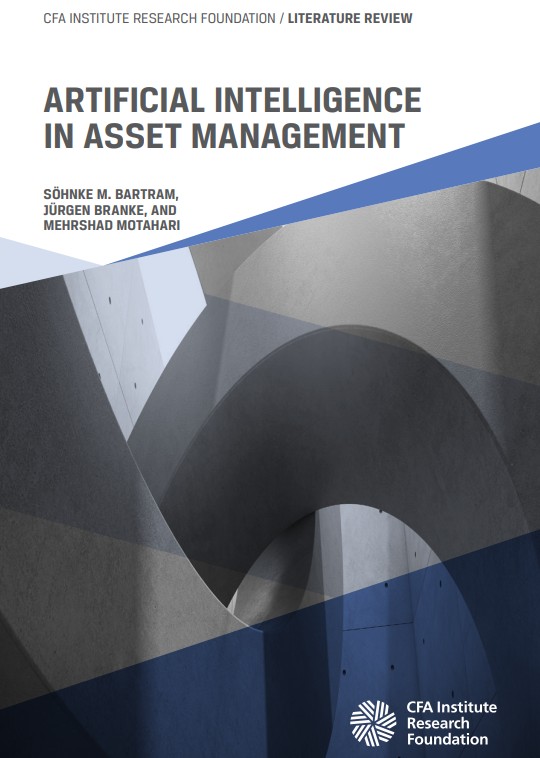
Scaling Efficiency: The Definitive Guide to Artificial Intelligence in Asset Management PDF
Scaling Efficiency: The Definitive Guide to Artificial Intelligence in Asset Management PDF
The convergence of finance and technology has made the concept of artificial intelligence in asset management pdf a frequent search query for investment professionals and technology strategists alike. As the financial sector navigates a period of intense margin pressure, regulatory complexity, and the explosive growth of data, Artificial Intelligence (AI) is no longer a futuristic novelty; it is a critical necessity for survival and growth. Specifically in asset management, AI technologies—including machine learning (ML), natural language processing (NLP), and computer vision—are reshaping everything from alpha generation and portfolio construction to operational efficiency and client servicing.
The shift is profound: firms are moving from relying solely on human intuition and traditional econometric models to systems that analyze petabytes of structured and unstructured data, identify subtle market signals, and automate decision-making. The demand for clear, strategic guidance on this topic is why documents focusing on artificial intelligence in asset management pdf or similar detailed reports are so highly valued across the industry, often serving as a roadmap for digital transformation.
This comprehensive guide serves as that definitive resource, outlining the strategic imperative for AI adoption, detailing its applications across the asset management value chain, exploring the underlying technical capabilities, and addressing the key challenges that firms must overcome to realize the full potential of AI.
I. The Strategic Imperative for AI Adoption
Asset management firms face a triple threat: fee compression from passive investing, mounting costs from compliance, and the constant battle for market alpha in increasingly efficient markets. AI offers powerful solutions to each of these challenges, making the transition to an intelligent operating model mandatory for long-term viability. The value proposition for artificial intelligence in asset management pdf can be broken down into three strategic pillars.
Market Alpha Generation
The traditional sources of alpha—information asymmetry and behavioral biases—are rapidly eroding. AI, however, unlocks a new frontier for quantitative advantage. Machine learning algorithms can process and synthesize massive, diverse datasets far beyond human capability. This includes not only price and volume data but also “alternative data” sources (satellite imagery, social media sentiment, news transcripts).
AI models excel at identifying non-linear relationships and transient market anomalies that generate predictive signals. By incorporating pattern recognition and predictive analytics, AI empowers portfolio managers to build more robust models that are dynamic and less susceptible to the biases inherent in human decision-making. The pursuit of differentiated alpha is the single largest investment driver for artificial intelligence in asset management pdf initiatives today.
Cost Reduction and Operational Efficiency
AI’s ability to automate high-volume, repetitive tasks offers a direct path to cutting overhead costs and improving client satisfaction. Robotic Process Automation (RPA), which often works in tandem with specialized AI systems, can handle crucial, yet mundane, back-office functions.
Examples include:
-
Trade Reconciliation: Automatically matching and settling trades, reducing error rates.
-
Data Entry and Extraction: Using Optical Character Recognition (OCR) and Natural Language Processing (NLP) to extract key figures from thousands of financial statements or legal documents, a feature highly relevant to the discussions found in any strategic artificial intelligence in asset management pdf.
-
Reporting: Generating standardized regulatory and client reports automatically, slashing the time required by compliance and client relations teams.
McKinsey research suggests that AI could eventually automate a substantial portion of tasks currently performed in middle- and back-office functions, leading to significant margin expansion.
Regulatory and Risk Compliance
The regulatory burden on asset managers (MiFID II, Dodd-Frank, etc.) is enormous. AI provides a powerful layer of support in the GRC (Governance, Risk, and Compliance) space. AI-powered systems can:
-
Monitor Trades: Automatically flag transactions that violate complex regulatory limits or exhibit signs of insider trading or market manipulation, a capability often highlighted in the technical annex of an artificial intelligence in asset management pdf.
-
Analyze Contracts: Use NLP to review and categorize thousands of legal agreements to ensure adherence to mandated clauses.
-
Stress Testing: Run highly sophisticated, non-linear stress tests that explore a far wider range of possible economic scenarios than traditional models, providing a more robust risk profile.
By automating compliance checks, AI not only saves time but drastically reduces the human error that can lead to costly fines and reputational damage.
II. AI Across the Asset Management Value Chain
To understand the full scope of AI’s impact, we must examine its integration into the four major components of asset management operations.
1. Investment Decision Making (Alpha Generation)
This is the most celebrated application of AI. It involves using machine learning algorithms to augment or replace human judgment in portfolio construction and security selection.
Machine Learning for Signal Extraction
ML models, such as deep neural networks, are being deployed to ingest vast amounts of structured data (e.g., global macroeconomic indicators, earnings reports, real-time transaction data) and identify predictive signals too subtle for human analysts. Instead of relying on predefined linear factors (like Price-to-Earnings ratios), these models dynamically adapt to market shifts, making them critical for any forward-looking artificial intelligence in asset management pdf.
Natural Language Processing (NLP) on Alternative Data
The rise of “alternative data” has been enabled almost entirely by NLP. This includes:
-
News and Filings Analysis: Using NLP to read millions of news articles, analyst reports, and regulatory filings (like 10-Ks) to gauge sentiment, extract key themes, and identify early shifts in corporate strategy long before they are reflected in stock prices.
-
Social Media Sentiment: Analyzing massive feeds of social media and forum data to understand public perception of companies and products, providing a real-time behavioral edge.
2. Risk Management and Portfolio Construction
AI shifts risk management from a reactive exercise to a proactive, predictive discipline.
Dynamic Risk Allocation
Traditional portfolio optimization models (like Mean-Variance Optimization) rely on historical volatility, which often fails during market crises. AI systems use advanced techniques like Reinforcement Learning (RL) to dynamically adjust risk exposure based on current, real-time market conditions and predicted future volatility. These models learn optimal hedging strategies over time, leading to more resilient portfolios—a core theme in any strategic artificial intelligence in asset management pdf.
Anomaly Detection and Portfolio Drift
AI continuously monitors portfolio holdings for subtle signs of performance degradation or “style drift” (deviating from the stated investment strategy). Machine learning is particularly effective at detecting these subtle anomalies, alerting managers to correct the course before minor issues escalate.
3. Back-Office and Operational Efficiency
The use of AI in operations transforms the cost structure and reduces the friction of the investment lifecycle.
Automated Document Processing
In the back office, the volume of unstructured data—invoices, client onboarding forms, legal documents—is staggering. AI-powered Recognition Systems (OCR + NLP) automatically categorize, validate, and extract data from these documents, feeding it directly into core systems (like the general ledger). This automation ensures accuracy, speeds up processing, and allows back-office staff to focus on exceptions rather than manual data entry.1 The operational savings enabled by this form of artificial intelligence in asset management pdf solutions are critical for profitability.
Intelligent Workflow Management
AI is used to optimize internal processes, such as IT helpdesk requests or compliance review queues. By predicting the complexity and urgency of a task, AI can route it to the appropriate human or automated resource, minimizing bottlenecks and maximizing internal service levels.
4. Client Service and Engagement
AI is enabling asset managers to move beyond standardized service models to hyper-personalized, high-touch client experiences.
Conversational AI and Virtual Assistants
Chatbots and virtual assistants, driven by the Conversational AI pattern, are being deployed to handle routine client inquiries (e.g., “What is the return on my account last quarter?”) 24/7. This frees human client relationship managers (CRMs) to focus on complex, value-added conversations. The latest generative AI models are even helping CRMs draft personalized communications and tailor investment updates.2
Hyper-Personalization for Advice
Robo-advisors are the most prominent example of AI in client advice, but the concept extends further. AI analyzes vast amounts of client data—risk tolerance, financial goals, behavioral patterns, and historical transactions—to offer highly individualized portfolio recommendations, custom reporting, and targeted education. This level of granular personalization drives higher client retention and satisfaction, a key goal in implementing artificial intelligence in asset management pdf strategies.
III. Deep Dive into AI Techniques
Successfully executing the applications detailed above requires a mastery of specific AI techniques, moving beyond generalized discussions to focused technical competence, a level of detail expected in a serious artificial intelligence in asset management pdf.
Machine Learning for Signal Extraction
At the core of alpha generation are models designed for pattern recognition in complex, high-dimensional data. This includes:
-
Supervised Learning: Training models on labeled data (e.g., historical stock prices linked to past economic events) to predict future outcomes (e.g., next month’s stock price movement).
-
Unsupervised Learning: Using clustering techniques to identify natural groupings of assets or clients that human analysts might miss.
-
Deep Learning: Employing multi-layered neural networks to process time-series data or alternative data (images, text) where features are not easily extracted manually.
Natural Language Processing (NLP) for Unstructured Data
NLP is the engine that converts text into actionable data points. Key NLP tasks include:
-
Named Entity Recognition (NER): Identifying and categorizing key entities in a document (e.g., company names, dates, financial figures).
-
Sentiment Analysis: Determining the emotional tone (positive, negative, neutral) of a text snippet, crucial for assessing market reaction to news.
-
Topic Modeling: Automatically identifying the main themes across a large corpus of documents (e.g., identifying early signs of supply chain distress across thousands of corporate press releases).
Reinforcement Learning (RL) for Dynamic Strategy
RL is a highly advanced technique where an AI agent learns to make sequential decisions by interacting with an environment and receiving rewards or penalties. In asset management, the “environment” is the market, and the “reward” is the portfolio return.
RL is ideal for:
-
Algorithmic Trading: Developing execution strategies that learn to minimize slippage and maximize fill rates by dynamically adapting to real-time market microstructure.
-
Optimal Portfolio Rebalancing: Learning the optimal timing and size of trades required to maintain a target risk/return profile under shifting market conditions. This application is often cited in the most cutting-edge research regarding artificial intelligence in asset management pdf reports.
IV. Challenges and the Path Forward
Despite the immense potential, the journey to becoming an AI-driven asset manager is fraught with significant challenges. Addressing these obstacles requires strategic investment and a cultural shift.
Data Quality and Governance
AI models are only as good as the data they are trained on. Asset managers often struggle with fragmented, siloed, and messy historical data. A key prerequisite for an AI strategy is a multi-year effort to unify and govern data quality, ensuring data is clean, labeled, and easily accessible across the organization—a foundational step that often precedes the final publication of an artificial intelligence in asset management pdf roadmap.
Explainability (XAI) and Regulation
In finance, “black box” AI models—those that achieve high accuracy but whose decision-making process is opaque—are problematic. Regulators and clients require transparency. A manager cannot simply tell an investor, “The AI said so.” This necessitates a focus on Explainable AI (XAI), which develops techniques to interpret and justify the outputs of complex models. XAI is vital for compliance and building client trust.3
Talent and Culture Gaps
The most significant hurdle is the talent gap. AI development requires specialized skills in mathematics, computer science, and engineering that are rarely found in traditional finance degree programs. Firms must either aggressively recruit data scientists, machine learning engineers, and MLOps specialists, or strategically partner with Nearshore Artificial Intelligence providers to quickly scale their capabilities. Furthermore, there must be a cultural shift from skepticism toward technology to a willingness among portfolio managers to trust and effectively collaborate with AI-augmented systems.
Conclusion
The transformation catalyzed by artificial intelligence in asset management pdf documents and related strategies is reshaping the industry’s economic structure. From providing new avenues for alpha generation through sophisticated data analysis to driving radical cost efficiencies via automation, AI offers a clear competitive edge.
The successful asset manager of tomorrow will be the one that strategically integrates AI across its entire value chain—moving from reactive reporting to predictive decision-making. Achieving this requires more than just buying software; it demands a multi-year commitment to data governance, investment in specialized talent (potentially via Nearshore Artificial Intelligence partners), and a steadfast dedication to responsible, explainable AI implementation. For those ready to lead this transformation, the insights provided within a detailed artificial intelligence in asset management pdf are the starting point for a profitable and sustainable future.
you can download artificial intelligence in asset management pdf from here
you can also read about Strategic Advantage of Nearshore Artificial Intelligence from here